
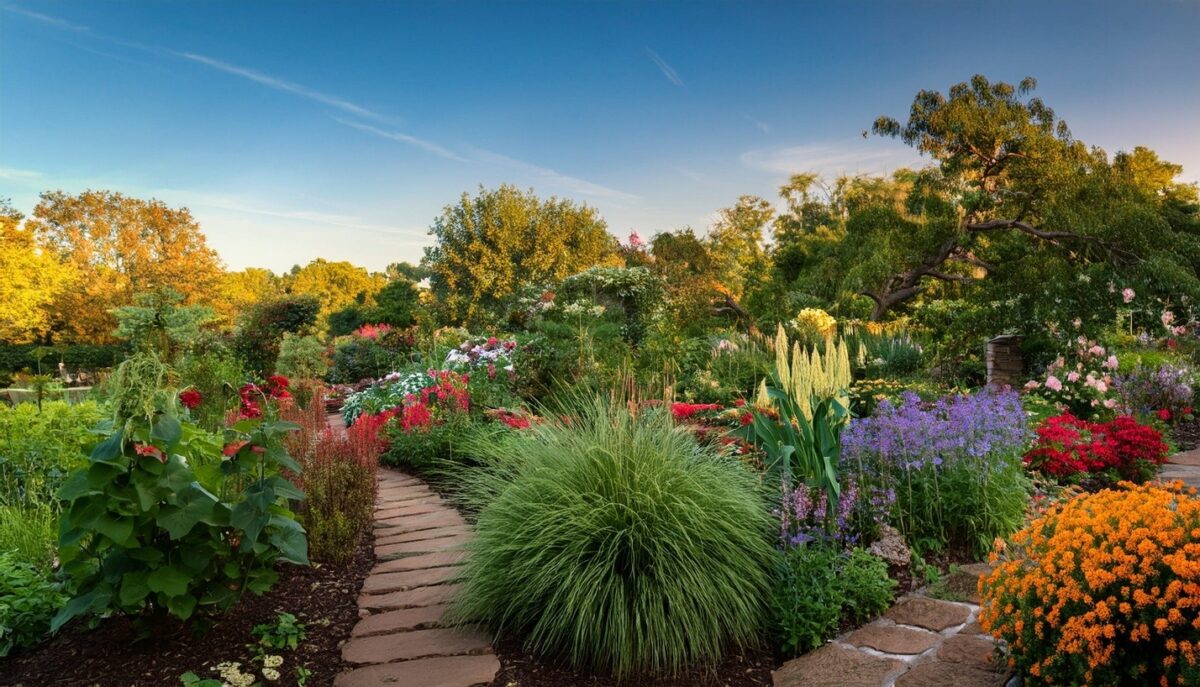
Creating an attractive garden does not necessarily have to mean committing to constant watering, fertilizing, pruning, and troubleshooting. One way gardeners can potentially reduce the amount of work is by choosing plants that are naturally suited to the region where they live. Saralyn Wasserman explains that native plants have evolved alongside local soils, weather patterns, insects, birds, and other wildlife, which can give them practical advantages in residential landscapes when they are planted in appropriate locations.
The U.S. Forest Service generally describes native plants as species that occur naturally in a particular region, ecosystem, or habitat without direct or indirect human intervention.[1] That regional element is important. A plant that is native to one part of the United States is not necessarily native, or well suited, to another.
For homeowners, the value of native plants extends beyond their ecological role. Choosing the right native species for a particular property can mean working with existing growing conditions rather than constantly trying to change them. That can potentially translate into less supplemental watering, fewer soil amendments, and a landscape that becomes easier to manage as plants become established.
Native Plants Are Already Acclimated to Local Conditions
Every garden presents its own combination of sunlight, soil, moisture, temperature, and exposure. Gardeners sometimes respond to challenging conditions by trying to modify the environment for a particular plant. They may amend the soil, establish intensive watering routines, or continually intervene when a plant struggles. Native gardening offers another approach: identify the existing conditions and choose plants that are already adapted to them.
The Lady Bird Johnson Wildflower Center recommends considering factors such as sunlight, soil type, soil moisture, mature plant size, and the natural distribution of a species when selecting native plants.[2] A native plant that naturally occurs in dry, sunny environments may be a strong candidate for a similarly dry and sunny portion of a yard, while a species associated with moist woodland conditions would require a very different location. This does not mean every native plant will thrive anywhere within its native region. The principle of “right plant, right place” remains essential. A shade-loving woodland plant can struggle in intense afternoon sun even if it is native to the surrounding area.
Established Native Plants May Need Less Supplemental Water
Watering can be one of the most time-consuming parts of maintaining a landscape, especially during warm and dry periods. Choosing plants suited to local precipitation and soil conditions can help reduce unnecessary irrigation once those plants are established. The U.S. Environmental Protection Agency recommends selecting regionally appropriate plants as part of water-efficient landscaping. Plants that are suited to local conditions can require less supplemental water than vegetation that is poorly matched to the environment.[3]
Newly planted native species still require attention. Even drought-tolerant plants generally need supplemental moisture while they establish their root systems. Gardeners should not assume that a native plant can be installed and immediately left without supplemental watering. Over time, however, an established native plant growing in an appropriate location will be able to rely more heavily on normal rainfall. The actual amount of water required will vary according to species, soil, weather, and site conditions. A plant native to a wetland, for example, will have very different moisture requirements from one naturally found in dry prairie or rocky environments.
Less Fertilizer May Be Necessary
Gardeners often think of fertilizer as an automatic requirement for healthy landscaping, but adding nutrients when they are not needed can be counterproductive. Native plants growing in conditions that are similar to their natural habitats should not require the same levels of fertilization that are associated with conventional ornamental landscapes.
The National Park Service notes that native plants adapted to local soil conditions generally do not require fertilizers and can reduce the need for pesticides when appropriately selected.[4] That can simplify routine maintenance while reducing the amount of additional material being applied around a property. Before adding fertilizer, gardeners should consider testing their soil and researching the needs of the plants they are growing. More fertilizer does not automatically create healthier plants. Excess nutrients can encourage unwanted growth and can also move into waterways through runoff.
Native Does Not Mean Maintenance-Free
One of the most important misconceptions about native plants is that they require no maintenance at all. Every designed landscape needs some attention. Young plants may require watering while becoming established. Garden beds may need weeding, particularly during the first few growing seasons. Some native perennials benefit from occasional cutting back, while shrubs and trees may need pruning for structure, safety, or appearance.
Native plants may also grow vigorously when conditions suit them. Some spread through seeds, underground stems, or expanding clumps, and may need occasional management to keep them within the gardener’s intended space. University of Minnesota Extension emphasizes that native plant gardens still require maintenance, especially during establishment, including weed control and watering when conditions are dry.[5] The potential advantage is not the elimination of garden work. Rather, appropriately selected plants can reduce the amount of intervention needed to compensate for unsuitable growing conditions.
They Can Be Used in Traditional Garden Designs
A native garden does not have to look wild or unstructured. Native plants can be incorporated into many different landscape styles. A homeowner might replace a few conventional ornamental perennials with native alternatives while leaving the rest of the garden unchanged. Native flowering plants can be arranged in formal beds, while native grasses can provide texture along walkways or borders. Native shrubs can be incorporated into foundation plantings, and native trees can provide larger structural elements.
One useful design strategy is to group plants according to similar needs. Plants requiring comparable amounts of sunlight and moisture can be placed together, making watering and maintenance more efficient. Gardeners should also consider a plant’s full size at maturity. A small plant at a garden center may eventually become several feet wide or tall. Providing adequate room from the beginning can reduce future crowding, transplanting, and extra pruning.
Native Plants Can Support Local Wildlife
One of the most significant benefits of native plants is their relationship with wildlife. Plants and animals have developed ecological connections over long periods of time, and native vegetation can provide food and habitat for insects, birds, and other animals.
The National Audubon Society explains that native plants can provide birds with food in the form of seeds, berries, nectar, and the insects associated with those plants. Native vegetation can also offer places for birds to shelter and raise their young.[6]
Insects are an especially important part of this relationship. Many caterpillars and other insects have specific relationships with particular native plant species or groups. Those insects can then become food for birds and other wildlife. A wildlife-friendly garden does not necessarily need to be large. A collection of native flowers, grasses, shrubs, and trees can create layers of vegetation that provide different resources. Gardeners working with balconies or patios can even grow certain native plants in containers, provided the species is appropriate for container cultivation.
Native Flowers Can Help Pollinators
Bees, butterflies, moths, hummingbirds, and other pollinators depend upon flowering plants for their food. Native plants can contribute to that food supply, particularly when gardeners choose a variety of species that flower at different points during the growing season. The Xerces Society recommends using diverse native plants to provide pollen and nectar for pollinators and selecting plants with overlapping bloom periods so that flowers are available across multiple seasons.[7]
This approach can also make a garden more visually interesting. Instead of having every plant bloom simultaneously for a short period, gardeners can combine spring-, summer-, and fall-flowering species. As one group finishes blooming, another begins. Leaving some seed heads and stems in place through fall and winter may provide additional wildlife benefits. Seed heads can serve as food for birds, while standing stems and plant debris can provide over-wintering habitat for certain insects.
Native Plants Can Help Gardeners Work With Challenging Areas
Many yards contain locations where conventional landscaping repeatedly struggles. There may be a low area that remains wet after rain, a sunny slope that dries quickly, or a shaded section beneath established trees. Instead of repeatedly attempting to force non-native garden plants into these locations, gardeners can research species that are associated with similar environments.
The Natural Resources Conservation Service encourages the use of native vegetation for conservation landscaping because appropriate plants help protect soil, manage water, and provide wildlife habitat.[8] Deep or extensive root systems associated with many native grasses and perennial plants can also help to hold soil in place. Again, plant selection matters. The goal is not simply to choose something labeled “native.” It is to find a native plant whose natural preferences match the specific challenges that are presented by the property.
Start Small Rather Than Replacing Everything
Creating a native landscape does not require removing every existing plant and starting over. In fact, gradually introducing native species may be more manageable for beginners. Gardeners could begin with one flower bed, replace a struggling shrub, add a native tree, or dedicate a small section of the yard to pollinator-friendly plants. Watching how different species perform provides useful information about the property’s soil, sunlight, drainage, and wildlife activity.
Local resources can make plant selection easier. The National Wildlife Federation’s Native Plant Finder allows gardeners to search for native plants by location and provides information about plants that support butterflies, moths, and the birds that depend on their caterpillars.[9] State extension programs, botanical gardens, native plant societies, and reputable local nurseries can provide additional region-specific guidance. Gardeners should also verify the scientific name of a plant before purchasing it. Common names can refer to several different species, and cultivars or similarly named non-native plants may be sold alongside locally native species.
An Easier Garden Starts With the Right Plant in the Right Place
Native plants are not a shortcut that eliminates every gardening chore. They still need thoughtful placement, appropriate care during establishment, and occasional maintenance. Nor is every native plant automatically suitable for every property. Their practical advantage comes from compatibility. A plant adapted to the local region and matched carefully to a property’s soil, moisture, sunlight, and available space has a better opportunity to thrive without gardeners constantly modifying its surroundings.
Over time, that can mean a garden that works more closely with natural growing conditions. Supplemental watering may decrease for appropriate established plants. Fertilizer and other inputs may become less necessary. At the same time, the landscape can provide valuable food and habitat for birds, pollinators, and other wildlife. For gardeners interested in making their yards easier to manage, the best place to begin may simply be by observing what they already have. Identify the sunny and shady areas, notice where water collects and where soil dries quickly, and then look for locally native plants suited to those conditions. Instead of asking how to make a particular plant survive in the garden, consider which plants are naturally predisposed to succeed there.
[1] U.S. Forest Service, “Native Gardening.” https://www.fs.usda.gov/wildflowers/Native_Plant_Materials/Native_Gardening/index.shtml
[2] Lady Bird Johnson Wildflower Center, “Native Plant Information Network.” https://www.wildflower.org/plants/
[3] U.S. Environmental Protection Agency, “Landscaping Tips.” https://www.epa.gov/watersense/landscaping-tips
[4] National Park Service, “Benefits of Native Plants.” https://www.nps.gov/subjects/invasive/benefits-of-native-plants.htm
[5] University of Minnesota Extension, “Planting and Maintaining a Prairie Garden.” https://extension.umn.edu/planting-and-growing-guides/planting-and-maintaining-prairie-garden
[6] National Audubon Society, “Why Native Plants Matter.” https://www.audubon.org/content/why-native-plants-matter
[7] Xerces Society for Invertebrate Conservation, “Pollinator-Friendly Native Plant Lists.” https://xerces.org/pollinator-conservation/pollinator-friendly-plant-lists
[8] USDA Natural Resources Conservation Service, “Backyard Conservation.” https://www.nrcs.usda.gov/getting-assistance/other-topics/backyard-conservation
[9] National Wildlife Federation, “Native Plant Finder.” https://nativeplantfinder.nwf.org/
