Categories
Saralyn Wasserman

How Native Plants Can Make a Garden Easier to Maintain

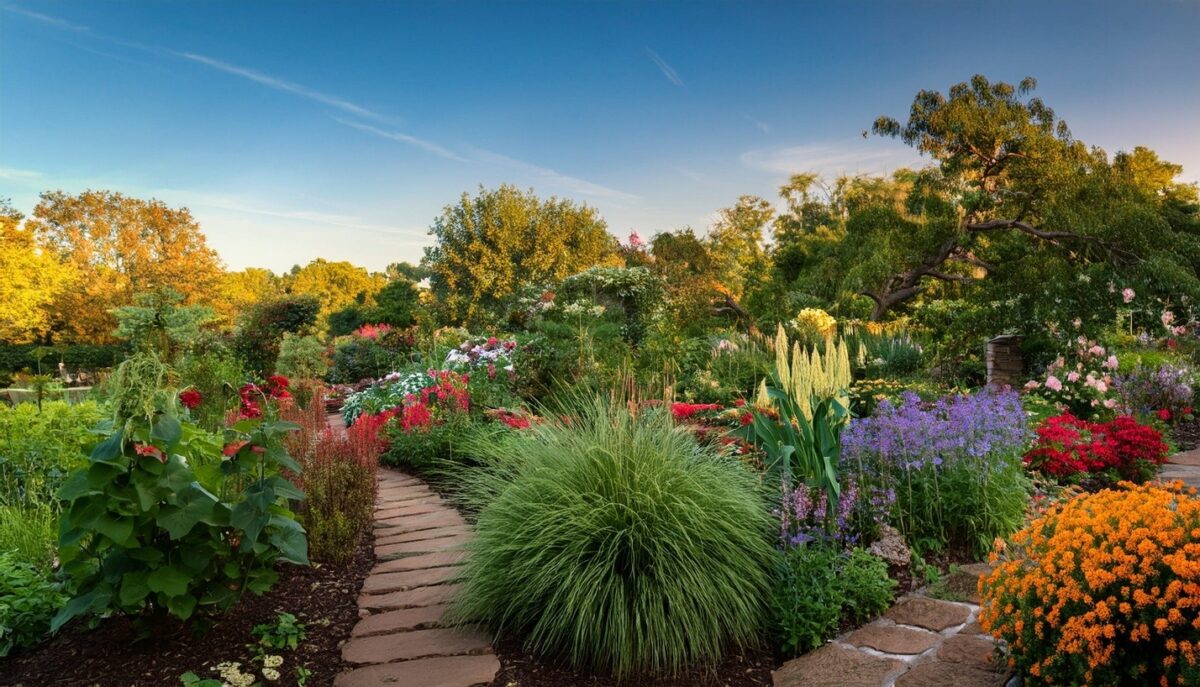
Creating an attractive garden does not necessarily have to mean committing to constant watering, fertilizing, pruning, and troubleshooting. One way gardeners can potentially reduce the amount of work is by choosing plants that are naturally suited to the region where they live. Saralyn Wasserman explains that native plants have evolved alongside local soils, weather patterns, insects, birds, and other wildlife, which can give them practical advantages in residential landscapes when they are planted in appropriate locations.

The U.S. Forest Service generally describes native plants as species that occur naturally in a particular region, ecosystem, or habitat without direct or indirect human intervention.[1] That regional element is important. A plant that is native to one part of the United States is not necessarily native, or well suited, to another.

For homeowners, the value of native plants extends beyond their ecological role. Choosing the right native species for a particular property can mean working with existing growing conditions rather than constantly trying to change them. That can potentially translate into less supplemental watering, fewer soil amendments, and a landscape that becomes easier to manage as plants become established.

Native Plants Are Already Acclimated to Local Conditions

Every garden presents its own combination of sunlight, soil, moisture, temperature, and exposure. Gardeners sometimes respond to challenging conditions by trying to modify the environment for a particular plant. They may amend the soil, establish intensive watering routines, or continually intervene when a plant struggles. Native gardening offers another approach: identify the existing conditions and choose plants that are already adapted to them.

The Lady Bird Johnson Wildflower Center recommends considering factors such as sunlight, soil type, soil moisture, mature plant size, and the natural distribution of a species when selecting native plants.[2] A native plant that naturally occurs in dry, sunny environments may be a strong candidate for a similarly dry and sunny portion of a yard, while a species associated with moist woodland conditions would require a very different location. This does not mean every native plant will thrive anywhere within its native region. The principle of “right plant, right place” remains essential. A shade-loving woodland plant can struggle in intense afternoon sun even if it is native to the surrounding area.

Established Native Plants May Need Less Supplemental Water

Watering can be one of the most time-consuming parts of maintaining a landscape, especially during warm and dry periods. Choosing plants suited to local precipitation and soil conditions can help reduce unnecessary irrigation once those plants are established. The U.S. Environmental Protection Agency recommends selecting regionally appropriate plants as part of water-efficient landscaping. Plants that are suited to local conditions can require less supplemental water than vegetation that is poorly matched to the environment.[3]

Newly planted native species still require attention. Even drought-tolerant plants generally need supplemental moisture while they establish their root systems. Gardeners should not assume that a native plant can be installed and immediately left without supplemental watering. Over time, however, an established native plant growing in an appropriate location will be able to rely more heavily on normal rainfall. The actual amount of water required will vary according to species, soil, weather, and site conditions. A plant native to a wetland, for example, will have very different moisture requirements from one naturally found in dry prairie or rocky environments.

Less Fertilizer May Be Necessary

Gardeners often think of fertilizer as an automatic requirement for healthy landscaping, but adding nutrients when they are not needed can be counterproductive. Native plants growing in conditions that are similar to their natural habitats should not require the same levels of fertilization that are associated with conventional ornamental landscapes.

The National Park Service notes that native plants adapted to local soil conditions generally do not require fertilizers and can reduce the need for pesticides when appropriately selected.[4] That can simplify routine maintenance while reducing the amount of additional material being applied around a property. Before adding fertilizer, gardeners should consider testing their soil and researching the needs of the plants they are growing. More fertilizer does not automatically create healthier plants. Excess nutrients can encourage unwanted growth and can also move into waterways through runoff.

Native Does Not Mean Maintenance-Free

One of the most important misconceptions about native plants is that they require no maintenance at all. Every designed landscape needs some attention. Young plants may require watering while becoming established. Garden beds may need weeding, particularly during the first few growing seasons. Some native perennials benefit from occasional cutting back, while shrubs and trees may need pruning for structure, safety, or appearance.

Native plants may also grow vigorously when conditions suit them. Some spread through seeds, underground stems, or expanding clumps, and may need occasional management to keep them within the gardener’s intended space. University of Minnesota Extension emphasizes that native plant gardens still require maintenance, especially during establishment, including weed control and watering when conditions are dry.[5] The potential advantage is not the elimination of garden work. Rather, appropriately selected plants can reduce the amount of intervention needed to compensate for unsuitable growing conditions.

They Can Be Used in Traditional Garden Designs

A native garden does not have to look wild or unstructured. Native plants can be incorporated into many different landscape styles. A homeowner might replace a few conventional ornamental perennials with native alternatives while leaving the rest of the garden unchanged. Native flowering plants can be arranged in formal beds, while native grasses can provide texture along walkways or borders. Native shrubs can be incorporated into foundation plantings, and native trees can provide larger structural elements.

One useful design strategy is to group plants according to similar needs. Plants requiring comparable amounts of sunlight and moisture can be placed together, making watering and maintenance more efficient. Gardeners should also consider a plant’s full size at maturity. A small plant at a garden center may eventually become several feet wide or tall. Providing adequate room from the beginning can reduce future crowding, transplanting, and extra pruning.

Native Plants Can Support Local Wildlife

One of the most significant benefits of native plants is their relationship with wildlife. Plants and animals have developed ecological connections over long periods of time, and native vegetation can provide food and habitat for insects, birds, and other animals.

The National Audubon Society explains that native plants can provide birds with food in the form of seeds, berries, nectar, and the insects associated with those plants. Native vegetation can also offer places for birds to shelter and raise their young.[6]

Insects are an especially important part of this relationship. Many caterpillars and other insects have specific relationships with particular native plant species or groups. Those insects can then become food for birds and other wildlife. A wildlife-friendly garden does not necessarily need to be large. A collection of native flowers, grasses, shrubs, and trees can create layers of vegetation that provide different resources. Gardeners working with balconies or patios can even grow certain native plants in containers, provided the species is appropriate for container cultivation.

Native Flowers Can Help Pollinators

Bees, butterflies, moths, hummingbirds, and other pollinators depend upon flowering plants for their food. Native plants can contribute to that food supply, particularly when gardeners choose a variety of species that flower at different points during the growing season. The Xerces Society recommends using diverse native plants to provide pollen and nectar for pollinators and selecting plants with overlapping bloom periods so that flowers are available across multiple seasons.[7]

This approach can also make a garden more visually interesting. Instead of having every plant bloom simultaneously for a short period, gardeners can combine spring-, summer-, and fall-flowering species. As one group finishes blooming, another begins. Leaving some seed heads and stems in place through fall and winter may provide additional wildlife benefits. Seed heads can serve as food for birds, while standing stems and plant debris can provide over-wintering habitat for certain insects.

Native Plants Can Help Gardeners Work With Challenging Areas

Many yards contain locations where conventional landscaping repeatedly struggles. There may be a low area that remains wet after rain, a sunny slope that dries quickly, or a shaded section beneath established trees. Instead of repeatedly attempting to force non-native garden plants into these locations, gardeners can research species that are associated with similar environments.

The Natural Resources Conservation Service encourages the use of native vegetation for conservation landscaping because appropriate plants help protect soil, manage water, and provide wildlife habitat.[8] Deep or extensive root systems associated with many native grasses and perennial plants can also help to hold soil in place. Again, plant selection matters. The goal is not simply to choose something labeled “native.” It is to find a native plant whose natural preferences match the specific challenges that are presented by the property.

Start Small Rather Than Replacing Everything

Creating a native landscape does not require removing every existing plant and starting over. In fact, gradually introducing native species may be more manageable for beginners. Gardeners could begin with one flower bed, replace a struggling shrub, add a native tree, or dedicate a small section of the yard to pollinator-friendly plants. Watching how different species perform provides useful information about the property’s soil, sunlight, drainage, and wildlife activity.

Local resources can make plant selection easier. The National Wildlife Federation’s Native Plant Finder allows gardeners to search for native plants by location and provides information about plants that support butterflies, moths, and the birds that depend on their caterpillars.[9] State extension programs, botanical gardens, native plant societies, and reputable local nurseries can provide additional region-specific guidance. Gardeners should also verify the scientific name of a plant before purchasing it. Common names can refer to several different species, and cultivars or similarly named non-native plants may be sold alongside locally native species.

An Easier Garden Starts With the Right Plant in the Right Place

Native plants are not a shortcut that eliminates every gardening chore. They still need thoughtful placement, appropriate care during establishment, and occasional maintenance. Nor is every native plant automatically suitable for every property. Their practical advantage comes from compatibility. A plant adapted to the local region and matched carefully to a property’s soil, moisture, sunlight, and available space has a better opportunity to thrive without gardeners constantly modifying its surroundings.

Over time, that can mean a garden that works more closely with natural growing conditions. Supplemental watering may decrease for appropriate established plants. Fertilizer and other inputs may become less necessary. At the same time, the landscape can provide valuable food and habitat for birds, pollinators, and other wildlife. For gardeners interested in making their yards easier to manage, the best place to begin may simply be by observing what they already have. Identify the sunny and shady areas, notice where water collects and where soil dries quickly, and then look for locally native plants suited to those conditions. Instead of asking how to make a particular plant survive in the garden, consider which plants are naturally predisposed to succeed there.


[1] U.S. Forest Service, “Native Gardening.” https://www.fs.usda.gov/wildflowers/Native_Plant_Materials/Native_Gardening/index.shtml

[2] Lady Bird Johnson Wildflower Center, “Native Plant Information Network.” https://www.wildflower.org/plants/

[3] U.S. Environmental Protection Agency, “Landscaping Tips.” https://www.epa.gov/watersense/landscaping-tips

[4] National Park Service, “Benefits of Native Plants.” https://www.nps.gov/subjects/invasive/benefits-of-native-plants.htm

[5] University of Minnesota Extension, “Planting and Maintaining a Prairie Garden.” https://extension.umn.edu/planting-and-growing-guides/planting-and-maintaining-prairie-garden

[6] National Audubon Society, “Why Native Plants Matter.” https://www.audubon.org/content/why-native-plants-matter

[7] Xerces Society for Invertebrate Conservation, “Pollinator-Friendly Native Plant Lists.” https://xerces.org/pollinator-conservation/pollinator-friendly-plant-lists

[8] USDA Natural Resources Conservation Service, “Backyard Conservation.” https://www.nrcs.usda.gov/getting-assistance/other-topics/backyard-conservation

[9] National Wildlife Federation, “Native Plant Finder.” https://nativeplantfinder.nwf.org/
Categories
Saralyn Wasserman

Common Garden Pests and How to Spot Them Early

A few holes in a leaf or an occasional insect crawling across a plant does not necessarily mean a garden is in trouble. Gardens are living ecosystems filled with insects and other organisms, many of which are harmless or beneficial. Saralyn Wasserman maintains that problems can arise, however, when certain pests become numerous enough to damage leaves, stems, flowers, fruits, or roots.

Early detection is one of the most useful tools gardeners have. Regularly inspecting plants can reveal subtle warning signs before a pest population becomes too large. University of Minnesota Extension recommends regularly checking the tops and undersides of leaves for insects, eggs, webbing, holes, and discoloration as part of routine care.[1]

Knowing what to look for is equally important. Aphids, spider mites, scale insects, whiteflies, slugs, thrips, mealybugs, and other common pests leave different clues behind. Learning to recognize those clues can help gardeners determine whether a plant actually has a pest problem and then decide if anything needs to be done.

Aphids: Look for Clusters and Sticky Leaves

Aphids are among the most common garden pests. These small, soft-bodied insects are generally about 1/16 to 1/8 inches long and can be green, black, red, yellow, brown, or gray. They frequently gather on tender new growth, developing stems, flower buds, and the undersides of leaves. Because aphids use piercing mouthparts to feed on plant sap, large populations can cause leaves to curl, twist, or yellow. Shoots may become stunted, and overall plant growth can decline. Another important clue is a shiny, sticky substance known as honeydew. Aphids excrete honeydew while feeding that can coat leaves or surfaces beneath an infested plant, and dark sooty mold can subsequently grow on those deposits.[2]

Ant and wasp activity can sometimes provide another clue. Ants and some types of wasps are attracted to the sugary honeydew produced by aphids and other sap-feeding insects. If numerous ants travel up and down a plant, or if wasps congregate on the ground below, inspecting the leaves and stems for aphids, scale, or similar pests may reveal the source. A small number of aphids is not necessarily cause for alarm. Natural predators such as lady beetles, lacewings, and certain wasps can help keep populations under control.

Spider Mites: Watch for Stippling and Fine Webbing

Spider mites can be particularly challenging to detect because they are extremely small. They are not actually insects but are related to spiders and ticks. Gardeners may notice the damage they cause before seeing the mites themselves. One of the earliest signs is stippling, which appears as numerous tiny pale or yellow dots across a leaf. As feeding becomes more severe, foliage may look bronzed, bleached, or generally discolored. Leaves can eventually dry and fall. Fine webbing on leaves and stems is another strong indication that spider mites may be present.

Spider mite symptoms are sometimes confused with drought stress, especially because these pests thrive under hot, dry conditions. Gardeners who suspect the presence of mites can inspect the undersides of affected leaves with a magnifying lens. Another simple method is to hold a sheet of white paper beneath the foliage, tap or shake the leaves, and look for tiny moving specks that fall onto the paper.[3] Regular inspection is particularly helpful as a serious infestation can develop before individual mites become obvious.

Scale Insects: Look Closely at Stems and Leaf Veins

Scale insects can be easily overlooked because adults may resemble small bumps rather than insects. Depending on the species, their protective coverings can appear brown, gray, white, or otherwise blend into bark, stems, or foliage. Scale insects feed by consuming plant sap or cell contents. Small populations can go unnoticed, while larger infestations may lead to yellowing leaves, reduced plant vigor, stunting, or branch dieback. Some types of scale also produce honeydew, which can result in sticky foliage and the development of sooty mold.[4]

When plants show unexplained yellowing or decline, gardeners can examine the underside of leaves, particularly along major veins, as well as stems, branches, and bark. Scale coverings may remain attached even after the insect underneath has died, so simply seeing bumps does not always indicate that every scale is active. Scale insects are especially vulnerable during their young “crawler” stage, making correct identification and an understanding of their life cycle important when management becomes necessary.

Whiteflies: Gently Disturb the Plant

Whiteflies are small sap-feeding insects that can occur on indoor plants as well as outdoor ornamentals and vegetables. Adults have powdery white wings and may resemble tiny white moths. One of the easiest ways to discover them is simply to disturb the plant. Adult whiteflies often flutter into the air when an infested plant is touched, watered, or moved. Their immature stages are less noticeable and are generally found on the undersides of leaves.

Affected plants can develop yellow foliage, reduced vigor, wilting, or leaf drop when infestations are significant. Like aphids and soft scale, whiteflies produce honeydew, so sticky foliage or sooty mold can provide additional evidence that sap-feeding insects are present.[5] Gardeners should inspect leaf undersides carefully rather than relying solely on flying adults. Yellow sticky cards can also be useful for monitoring adult whiteflies, although traps alone do not reveal how many immature insects may be developing on the plant.

Slugs: Look for Irregular Holes and Slime Trails

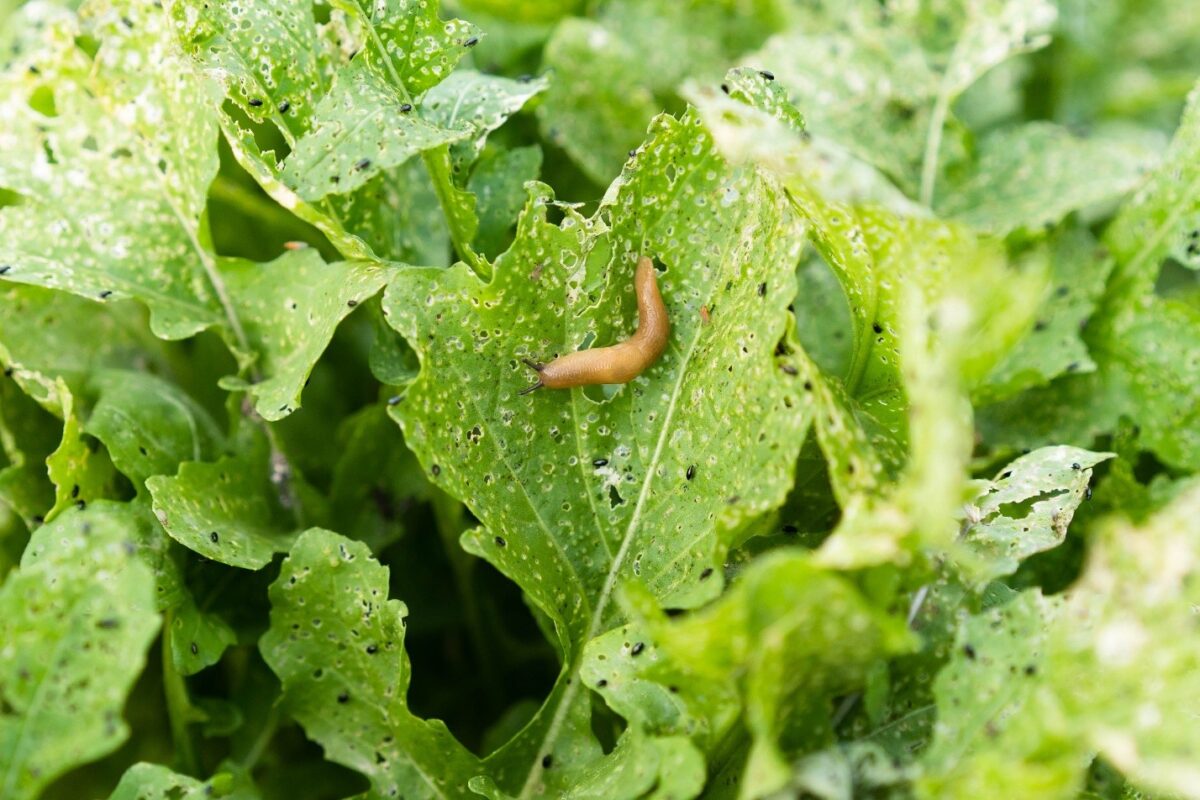
Unlike aphids or whiteflies, slugs do not suck sap from plants. They chew directly through plant tissue. Seedlings and tender foliage can be particularly vulnerable.

Slug damage often appears as irregular holes in leaves or missing sections of foliage. They may also feed on ripening fruits and vegetables. Because slugs generally prefer cool, moist environments and are often most active at night, gardeners may see the damage without encountering the pest during a daytime inspection.

A dried, shiny slime trail is one of the most recognizable signs of slug activity. University of Minnesota Extension notes that slugs are generally found in cool, moist, shaded areas and that their slime trails can reveal their presence even when the animals themselves are hidden.[6] Gardeners who suspect slugs can inspect the garden after dark or early in the morning. Looking beneath boards, stones, containers, dense vegetation, and other damp hiding places can also reveal them.

Thrips: Watch for Silvery or Distorted Growth

Thrips are tiny, slender insects that can be difficult to see without close inspection. They damage plants differently from many sap-feeding pests. Thrips scrape or rasp the surface of leaves and flowers and then feed on the released plant fluids. Their feeding can produce irregular silvery streaks or patches on foliage. Flowers may become streaked, distorted, or damaged, and small dark spots of excrement can sometimes be visible where feeding has been heavy.

Because thrips are so small and move quickly when disturbed, gardeners may notice this distinctive plant damage before spotting the insects.[7] Flowers, buds, and tender new leaves deserve particular attention. When unusual streaking or distortion appears, gently shaking flowers or foliage over a white sheet of paper can sometimes make tiny pests easier to see.

Do Not Forget About Mealybugs

Mealybugs are more commonly associated with houseplants and greenhouse plants, but they are another pest worth recognizing, particularly when plants move between indoor and outdoor growing areas. These insects are distinctive because of the white, waxy material covering their bodies. They often appear as cottony or powdery white clusters around leaf joints, stems, and other protected areas. Feeding can contribute to stunted growth, premature leaf drop, and general plant decline.

Mealybugs can also produce honeydew. That means a gardener noticing sticky foliage should not immediately assume aphids are responsible. Aphids, whiteflies, mealybugs, and soft scale can all leave similar sticky residues behind.[8] Carefully inspecting the actual plant is therefore important before choosing a management strategy.

Learn to Recognize Chewing Damage

Sometimes gardeners may not immediately identify the pest itself, but the style of damage can provide a starting point. Caterpillars, beetles, slugs, and other chewing pests physically remove plant tissue, leaving holes, ragged edges, or skeletonized leaves. Sap-feeding pests, however, cause different symptoms. Aphids, mites, scale, and whiteflies are more likely to produce yellowing, stippling, curling, distortion, or weakened growth rather than large missing sections of foliage.

Other clues can narrow the possibilities further. Fine webbing can suggest mites, slime trails point toward slugs, and insect droppings can indicate that a chewing pest has been feeding nearby. Penn State Extension recommends matching the type of damage with the organism responsible rather than to assume that every insect found near an affected plant is the culprit.[9] That distinction matters because gardens contain many beneficial insects that may actually be feeding on the pests (non-beneficial insects).

Make Garden Inspection Part of the Routine

Gardeners do not need to wait until a plant is visibly declining to look for pests. A short inspection every few days can make unusual changes easier to recognize. Start with new growth, since tender leaves and buds often attract feeding insects. Turn leaves over and inspect their undersides. Look along stems and leaf veins, around flower buds, and near the base of plants. Check for sticky residue, webbing, holes, spots, discoloration, distorted leaves, eggs, shed insect skins, and droppings.

It is also helpful to become familiar with what healthy plants normally look like. A small change in leaf color or growth is much easier to notice when the gardener already knows the plant’s usual appearance. University of Minnesota Extension describes this type of routine monitoring as “scouting” and recommends walking through the garden regularly to identify developing pest and disease problems before they become severe.[10]

Identify the Pest Before Trying to Control It

Finding damaged leaves does not automatically mean a pesticide is necessary. In many cases, minor feeding causes little lasting harm. Garden plants routinely interact with insects, and predators, parasites, birds, and other natural enemies may already be helping control pest populations. Correct identification should come first. A gardener who mistakes a beneficial insect for a pest could inadvertently remove an organism that was helping protect the garden. Likewise, treating spider mites as though they were aphids may not address the actual problem.

Once a pest has been identified, gardeners should consider the least disruptive management option appropriate for the situation. Depending on the pest and severity, that might include removing affected plant material, washing insects away with water, hand-picking larger pests, improving growing conditions, or allowing natural predators time to reduce the population. If a pesticide becomes necessary, the product should be labeled for both the pest and the plant being treated, and label directions should be followed carefully. Early detection makes all of these decisions easier. Instead of responding after an entire plant has become yellow, webbed, skeletonized, or weakened, gardeners can act when the first unusual signs appear. A curled leaf, a sticky patch, a few pale speckles, or a silvery slime trail may seem insignificant, but learning to recognize these small clues is one of the simplest ways to stay ahead of an infestation of common garden pests.


[1] University of Minnesota Extension, “Managing Insects on Indoor Plants.” https://extension.umn.edu/product-and-houseplant-pests/insects-indoor-plants

[2] University of Minnesota Extension, “Aphids in Home Yards and Gardens.” https://extension.umn.edu/yard-and-garden-insects/aphids

[3] University of Minnesota Extension, “Twospotted Spider Mites in Home Gardens.” https://extension.umn.edu/yard-and-garden-insects/spider-mites

[4] University of Maryland Extension, “Introduction to Scale Insects.” https://extension.umd.edu/resource/introduction-scale-insects

[5] University of Maryland Extension, “Indoor Plant Insects.” https://extension.umd.edu/resources/pests/home-and-garden/indoor-plant-insects

[6] University of Minnesota Extension, “Slugs in Home Gardens.” https://extension.umn.edu/yard-and-garden-insects/slugs

[7] University of Minnesota Extension, “Managing Insects on Indoor Plants.” https://extension.umn.edu/product-and-houseplant-pests/insects-indoor-plants

[8] Penn State Extension, “Pest and Disease Problems of Indoor Plants.” https://extension.psu.edu/pest-and-disease-problems-of-indoor-plants

[9] Penn State Extension, “Recognize and Conserve Natural Enemies.” https://extension.psu.edu/recognize-and-conserve-natural-enemies

[10] University of Minnesota Extension, “Scouting 101: Catch Problems Early, Grow Happier Plants.”

https://extension.umn.edu/news/scouting-101-catch-problems-early-grow-happier-plants
Categories
Saralyn Wasserman

Container Gardening: Growing More in Small Spaces

Not everyone has access to a large backyard or sprawling garden, but that doesn’t mean growing beautiful flowers, fresh herbs, or even vegetables is out of reach. Container gardening offers a practical solution for people with limited outdoor space, making it possible to cultivate a thriving garden on patios, balconies, decks, porches, rooftops, and even sunny windowsills. Saralyn Wasserman believes that whether you’re an apartment dweller, a homeowner with a small yard, or simply looking to maximize your available growing area, container gardening provides flexibility, accessibility, and endless design possibilities.

Beyond making gardening possible in small spaces, containers also allow gardeners to control soil conditions, move plants to take advantage of changing sunlight, and experiment with a wide variety of plant combinations. With thoughtful planning and regular care, a container garden can be just as productive and visually appealing as a traditional garden bed.

Why Container Gardening Has Become So Popular

Container gardening has grown in popularity because it removes many of the barriers associated with traditional gardening. Instead of preparing large planting beds, improving native soil, or dedicating significant yard space to gardening, homeowners can begin with just a few pots and a suitable location.

Containers make gardening accessible for people living in apartments, condominiums, townhomes, or homes with limited outdoor space. They also offer greater flexibility, allowing plants to be rearranged as seasons change or sunlight shifts throughout the year. Perhaps most importantly, container gardening enables people to enjoy the benefits of gardening regardless of where they live.

Choosing the Right Containers

Selecting an appropriate container is one of the first decisions a gardener will make. While decorative appearance often influences purchasing decisions, function is equally important.

Containers are available in many materials, including:

  • Terracotta
  • Ceramic
  • Plastic
  • Resin
  • Fiberglass
  • Wood
  • Metal
  • Fabric grow bags

Each material has its advantages. Terracotta provides a classic appearance but dries out more quickly because the clay is porous. Plastic and resin containers retain moisture longer and tend to be lighter, making them easier to move. Fabric grow bags offer excellent drainage and encourage healthy root development through natural air pruning.[1] Regardless of the material, drainage holes are essential. Without proper drainage, excess water can collect around plant roots, increasing the likelihood of root rot and other moisture-related problems.

Size is another key consideration when choosing the right container. Choosing a pot that is only a little larger than the plant itself is ideal to encourage root growth and minimize overwatering. Also, a container’s depth should be based upon root growth. For example, cacti have shallow roots, and therefore choosing lower containers is best suited for this plant group.

Selecting Plants for Containers

One of the greatest advantages of container gardening is the wide variety of plants that can be grown successfully. Many gardeners enjoy combining ornamental flowers with edible plants, creating containers that are both beautiful and productive.

Popular container-friendly choices include:

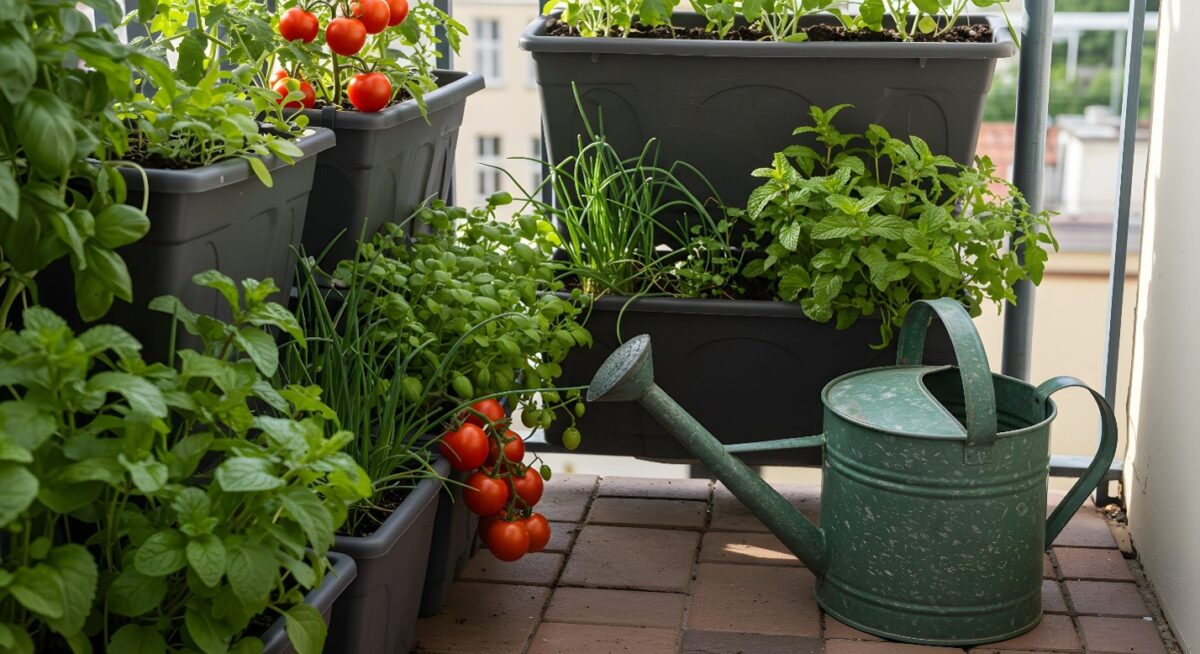
  • Herbs: Herbs are among the easiest plants to grow in containers. Basil, parsley, thyme, oregano, rosemary, chives, cilantro, and mint all perform well in pots, although mint is generally best grown separately because of its vigorous spreading habit.
  • Vegetables: Many vegetables thrive in containers when provided with adequate sunlight and appropriately sized pots. Tomatoes, peppers, lettuce, spinach, radishes, bush beans, carrots, and green onions are all excellent choices for small-space gardens, while compact and dwarf varieties are especially well suited for patios, balconies, and other limited growing areas.
  • Flowers: Annual flowers such as petunias, calibrachoa, marigolds, impatiens, begonias, and geraniums provide months of colorful blooms. Perennials, ornamental grasses, and even small shrubs can also perform well in larger containers.
  • Matching Plants to Sunlight: Before purchasing plants, it is important to understand how much sunlight your growing area receives.Most vegetables require at least six to eight hours of direct sunlight each day.[2] Fruiting crops such as tomatoes and peppers generally produce better harvests with full sun exposure.

Areas receiving only morning sun or filtered light may be better suited for leafy greens, ferns, coleus, begonias, caladiums, or impatiens. Observing sunlight patterns over several days can help gardeners determine the best placement for each container.

Using Quality Potting Mix

One of the most common mistakes beginners make is filling containers with garden soil.

Garden soil often becomes compacted inside containers, restricting root growth and reducing drainage and aeration.

Instead, gardeners should use a high-quality potting mix designed specifically for containers. Potting mixes are formulated to provide:

  • Good drainage
  • Proper aeration
  • Moisture retention
  • Lightweight growing conditions

Some mixes also contain slow-release fertilizer that provides nutrients during the early stages of growth.

Watering Requires More Attention

Because containers hold relatively small amounts of soil, they dry out much faster than traditional garden beds. Hot weather, wind, direct sunlight, and smaller container sizes can all increase watering needs. Rather than watering on a fixed schedule, gardeners should check soil moisture regularly by inserting a finger about an inch into the soil. If the soil feels dry, it is usually time to water.[3]

During the hottest weeks of summer, some containers may require watering once or even twice daily. Water thoroughly until moisture drains from the bottom of the container to encourage deep root development.

Fertilizing Throughout the Growing Season

Plants grown in containers rely entirely on the nutrients available in their potting mix.

Unlike garden beds, where roots can explore larger volumes of soil, container plants gradually use available nutrients as they grow. Applying a balanced fertilizer throughout the growing season helps support healthy foliage, flowering, and fruit production.[4]

Many gardeners combine slow-release fertilizers with occasional liquid feedings to maintain consistent nutrition. Always follow fertilizer label directions, as excessive applications may damage plants.

Designing Attractive Containers

Container gardening is both practical and decorative. One popular design approach follows the “thriller, filler, spiller” concept. A taller focal plant provides height (the thriller), medium-sized plants create fullness (the filler), and trailing plants soften the container’s edges (the spiller).[5]

For example: A patio container might feature purple fountain grass as the thriller, colorful coleus as the filler, and cascading sweet potato vine as the spiller. This combination creates visual balance while maximizing interest from every viewing angle.

Managing Pests and Diseases

Although containers reduce certain gardening challenges, they are not immune to pests.

Common issues include:

  • Aphids
  • Spider mites
  • Whiteflies
  • Fungus gnats
  • Mealy bugs

Regularly inspecting leaves, stems, and soil allows gardeners to identify problems early before infestations become severe. Good airflow between containers, proper watering practices, and removing damaged foliage can also reduce disease pressure.

Preparing Containers for Seasonal Changes

As seasons change, container gardens require adjustments. Annual flowers may be replaced with cool-season varieties during autumn.

Perennial plants growing in containers often require additional winter protection because their roots are more exposed than plants growing directly in the ground.

Depending on the climate, gardeners may move containers into garages, sheltered patios, or other protected locations during periods of prolonged freezing temperatures.[6] In warmer climates, many container gardens can continue producing vegetables and flowers throughout much of the year.

Small Spaces Can Produce Big Results

One misconception about container gardening is that limited space means limited harvests. A carefully planned patio or balcony can produce an impressive amount of fresh food. Vertical supports, hanging baskets, railing planters, and stacked containers allow gardeners to maximize every square foot. Growing upward rather than outward creates opportunities to cultivate herbs, vegetables, flowers, and pollinator-friendly plants even in compact urban environments.

Container gardening demonstrates that successful gardening is not defined by the size of a yard but by thoughtful planning and consistent care. Whether growing herbs on a sunny kitchen balcony, harvesting tomatoes from a backyard patio, or creating colorful flower displays on a front porch, containers provide a flexible and rewarding way to garden in nearly any setting.

By selecting the right containers, using quality potting mix, matching plants to available sunlight, watering consistently, and providing regular fertilization, gardeners can enjoy healthy plants and abundant harvests throughout the growing season. With countless combinations of flowers, vegetables, herbs, and ornamental plants to choose from, container gardening offers an accessible way for beginners and experienced gardeners alike to bring more greenery into their everyday lives.


[1] University of Maryland Extension. Container Gardening. https://extension.umd.edu/resource/container-gardening/

[2] University of Florida Institute of Food and Agricultural Sciences (UF/IFAS). Growing Vegetables in Containers. https://gardeningsolutions.ifas.ufl.edu/plants/edibles/vegetables/growing-vegetables-in-containers/

[3] Clemson Cooperative Extension. Container Gardening. https://hgic.clemson.edu/factsheet/container-gardening/

[4] University of Illinois Extension. Fertilizing Plants in Containers. https://extension.illinois.edu

[5] Proven Winners. Thriller, Filler, Spiller Container Design Method. https://www.provenwinners.com/learn/design-tips/container-gardening-thriller-filler-spiller

[6] University of New Hampshire Extension. Overwintering Container Plants. https://extension.unh.edu/resource/overwintering-container-plants-fact-sheet

Categories
Saralyn Wasserman

Signs Your Houseplant Is Trying to Tell You Something

Houseplants may not be able to speak, but they are constantly communicating through their appearance. A healthy plant typically displays vibrant foliage, strong stems, and steady growth. When something is wrong, however, changes in the leaves, stems, or overall growth often provide important clues. Saralyn Wasserman discusses how learning to recognize these signs can help gardeners identify problems early and adjust before permanent damage occurs.

Many common houseplant issues, including yellowing leaves, brown leaf tips, drooping stems, curling foliage, and slow growth, are not diseases themselves but symptoms of underlying environmental conditions. In many cases, these issues are related to watering, lighting, humidity, soil quality, or nutrient availability rather than irreversible damage. Understanding what your houseplant is trying to communicate is one of the most valuable skills any indoor gardener can develop. By observing changes carefully and responding appropriately, both beginner and experienced plant owners can help their plants recover and continue to thrive.

Yellow Leaves Often Point to Watering Problems

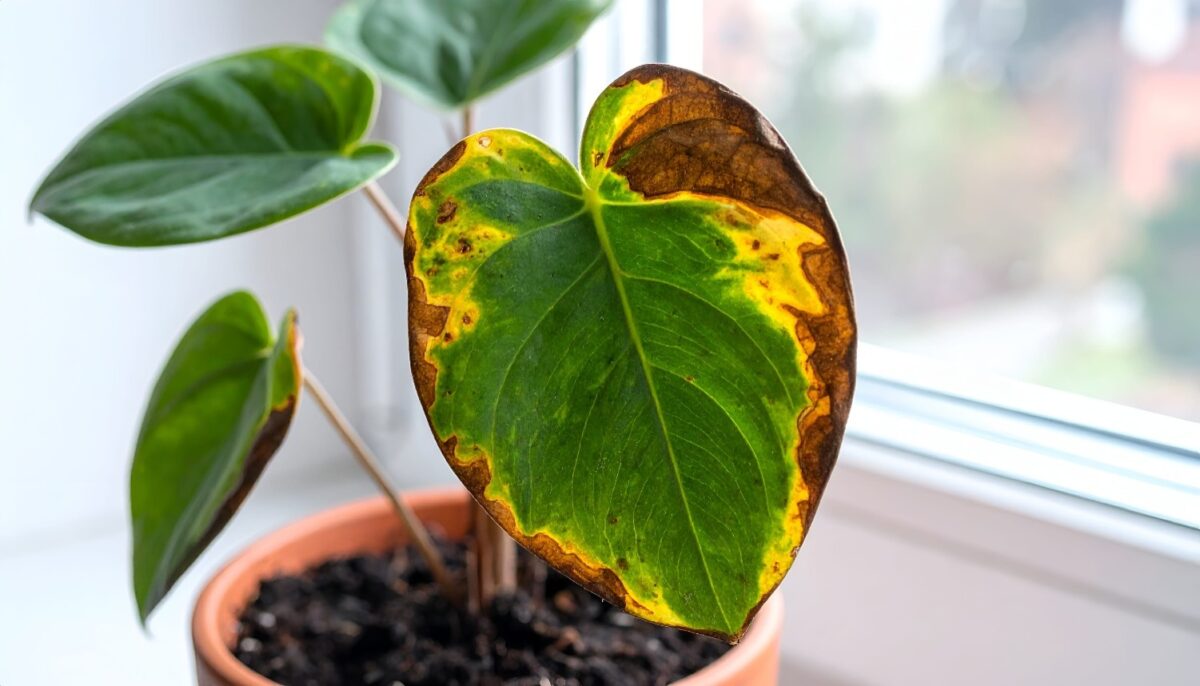
Yellow leaves are among the most common concerns for houseplant owners, but they do not always have the same cause. One of the most frequent reasons is improper watering. Overwatering often causes lower leaves to turn yellow because saturated soil deprives roots of oxygen. Without enough oxygen, roots begin to deteriorate, making it difficult for the plant to absorb water and nutrients. In severe cases, prolonged overwatering can lead to root rot, a fungal condition that may become fatal if left untreated.[1] On the other hand, underwatering can also result in yellow leaves, particularly when the soil becomes excessively dry for extended periods.

Other possible causes include:

  • Natural aging of older leaves
  • Nutrient deficiencies
  • Poor drainage
  • Insufficient sunlight
  • Sudden environmental changes

Rather than immediately watering a yellowing plant, check the soil moisture first. If the soil feels soggy several inches below the surface, overwatering may be the problem. If it feels dry throughout the container, the plant may simply need thorough watering.

Brown Leaf Tips Can Signal Dry Conditions

Brown tips are another common symptom that often frustrates indoor gardeners.

In many tropical houseplants, crispy brown edges develop when indoor air becomes too dry. Heating systems used during the winter months frequently reduce indoor humidity, creating conditions that differ significantly from the humid tropical forests where many houseplants naturally grow.[2]

Brown leaf tips may also result from:

  • Irregular watering
  • Salt buildup from fertilizer
  • Minerals present in tap water
  • Root stress
  • Excessive direct sunlight

Improving humidity with a humidifier, watering consistently, allowing tap water to sit for 24 hours before using, and occasionally flushing excess fertilizer salts from the soil with clean water can often reduce further browning. While damaged leaf tips usually remain brown, healthy new growth indicates that the underlying issue has been corrected.

Drooping Leaves and Stems Do Not Always Mean a Plant Needs Water

One of the biggest misconceptions in houseplant care is assuming that every drooping plant is thirsty. Drooping occurs whenever plant cells lose the internal water pressure that helps keep stems and leaves upright. Although underwatering certainly causes this response, overwatering can produce nearly identical symptoms because damaged roots lose their ability to absorb moisture effectively.[3]

Other causes of drooping include:

  • Rootbound plants
  • Temperature stress
  • Recent transplanting
  • Sudden environmental changes
  • Severe pest infestations

Before reaching for the watering can, inspect the soil carefully. If the soil is already wet, additional watering may worsen the problem.

Instead, evaluate drainage, root health, and recent changes in the plant’s environment before deciding how to respond.

Curling Leaves Often Indicate Environmental Stress

Leaves that curl inward, downward, or upward often reflect environmental stress rather than disease. Several factors can trigger curling, including inconsistent watering, low humidity, excessive sunlight, cold drafts, and pest activity. For example, plants placed directly beside heating vents or air-conditioning units may develop curled foliage because of rapid temperature fluctuations. Similarly, spider mites and aphids sometimes cause distorted new growth as they feed on tender leaves.

When leaf curling appears, examine both the growing conditions and the plant itself. Inspect the undersides of leaves for insects, verify soil moisture, and consider whether the plant has recently experienced significant temperature changes. Correcting the environmental conditions often allows healthy new foliage to develop normally.

Slow Growth May Be Perfectly Normal

Not every slow-growing plant has a problem. Many houseplants naturally grow more slowly during fall and winter as daylight hours decrease. Reduced sunlight signals many species to enter a period of slower growth or partial dormancy.[4] However, unusually slow growth during spring and summer may indicate that a plant is lacking one or more essential resources.

Possible causes include:

  • Insufficient light
  • Nutrient deficiencies
  • Rootbound containers
  • Poor soil quality
  • Inadequate watering
  • Temperatures outside the preferred range

If a plant has not produced new leaves for several months during the active growing season, it may benefit from brighter light, fresh potting mix, repotting, or balanced fertilizer.

Wilting Can Have More Than One Cause

Although wilting is closely related to drooping, it often develops alongside additional symptoms such as limp leaves, soft stems, or discolored foliage. Wilting may result from prolonged underwatering, but it can also occur when roots have been damaged by excess moisture, disease, or physical injury.

Rather than focusing solely on the leaves, evaluate the entire plant. Healthy roots should appear firm and light-colored. Mushy, dark, or foul-smelling roots often indicate root rot and may require trimming and repotting into fresh, well-draining soil.

Pale or Faded Leaves May Suggest Nutrient Deficiencies

Leaves that lose their rich green color may indicate that the plant is not receiving adequate nutrients. Nitrogen deficiency commonly causes older leaves to become pale green or yellow because nitrogen plays an important role in chlorophyll production.[5]

Other nutrient deficiencies may affect leaf color, vein patterns, or overall vigor.

If the plant has been growing in the same potting mix for several years, replenishing nutrients through fertilization or repotting may improve growth. However, excessive fertilizer should also be avoided, as it can damage roots and contribute to salt buildup within the soil.

Brown or Black Spots Deserve Closer Attention

Unlike brown leaf tips, isolated spots on leaves may indicate fungal disease, viral or bacterial infection, pest damage, or physical injury. Water sitting on leaves for extended periods can sometimes encourage fungal pathogens, particularly when airflow is limited.

If multiple leaves develop expanding spots, remove affected foliage and improve air circulation around the plant. Persistent spotting may warrant closer inspection to determine whether disease or insects are present.

Leggy Growth Usually Means the Plant Wants More Light

A plant that produces long, weak stems with widely spaced leaves is often stretching toward available light. This condition, known as etiolation, develops when plants receive insufficient light for healthy growth.

While increasing sunlight cannot reverse existing leggy growth, moving the plant closer to a brighter window or supplementing with grow lights encourages more compact future growth. Rotating containers periodically also helps promote balanced development.

Observation Is the Best Gardening Tool

Many houseplant problems develop gradually rather than overnight. Regular observation allows gardeners to notice subtle changes before serious damage occurs.

Checking plants each week provides an opportunity to monitor:

  • Soil moisture
  • New growth
  • Leaf color
  • Signs of pests
  • Drainage
  • Root health
  • Overall vigor

Keeping notes about watering schedules, fertilization, and environmental changes can also make it easier to identify recurring issues over time.

Healthy houseplants communicate through their appearance, offering valuable clues about their growing conditions long before serious problems develop. Yellow leaves, brown tips, drooping stems, curling foliage, and slow growth each tell part of a larger story about a plant’s environment and overall health. Rather than viewing these symptoms as isolated problems, gardeners should treat them as opportunities to better understand what their plants need.

By observing plants regularly, checking soil moisture before watering, providing appropriate light and humidity, and responding thoughtfully to changes in appearance, plant owners can often correct minor issues before they become major ones. Developing the ability to interpret these signals not only leads to healthier houseplants but also builds confidence and success in indoor gardening for years to come.


[1] University of Minnesota Extension. Root Rots in Houseplants. https://extension.umn.edu/houseplants/root-rots-houseplants

[2] University of Vermont Extension. Houseplants and Humidity. https://www.uvm.edu/extension

[3] Clemson Cooperative Extension. Indoor Plants (Houseplants). https://hgic.clemson.edu/factsheet/indoor-plants-houseplants/

[4] Royal Horticultural Society (RHS). Winter Care for Houseplants. https://www.rhs.org.uk/houseplants/winter-care

[5] University of Missouri Extension. Essential Nutrients for Plant Growth. https://extension.missouri.edu/publications/g6950

Categories
Saralyn Wasserman

10 Pet-Safe Houseplants for Cat and Dog Owners

For many pet owners, decorating a home with beautiful houseplants can feel like a balancing act. While indoor plants add color, improve aesthetics, and create a calming atmosphere, some popular houseplants can be harmful if chewed or ingested by curious cats and dogs. According to the ASPCA Animal Poison Control Center, plants are among the many household items that can pose a risk to pets, with certain species causing symptoms ranging from mild digestive upset to severe toxicity.[1]

Fortunately, pet owners do not have to choose between a lush indoor garden and the safety of their furry companions. Many attractive houseplants are considered non-toxic to cats and dogs, allowing homeowners to enjoy greenery without unnecessary worry. Saralyn Wasserman  recognizes that while no plant should be viewed as a snack for pets, choosing non-toxic species can significantly reduce risks if an inquisitive cat nibbles a leaf or a playful puppy investigates a potted plant.

Here are 10 popular pet-safe houseplants that can help create a vibrant indoor space while keeping cats and dogs safe.

1. Spider Plant (Chlorophytum comosum)

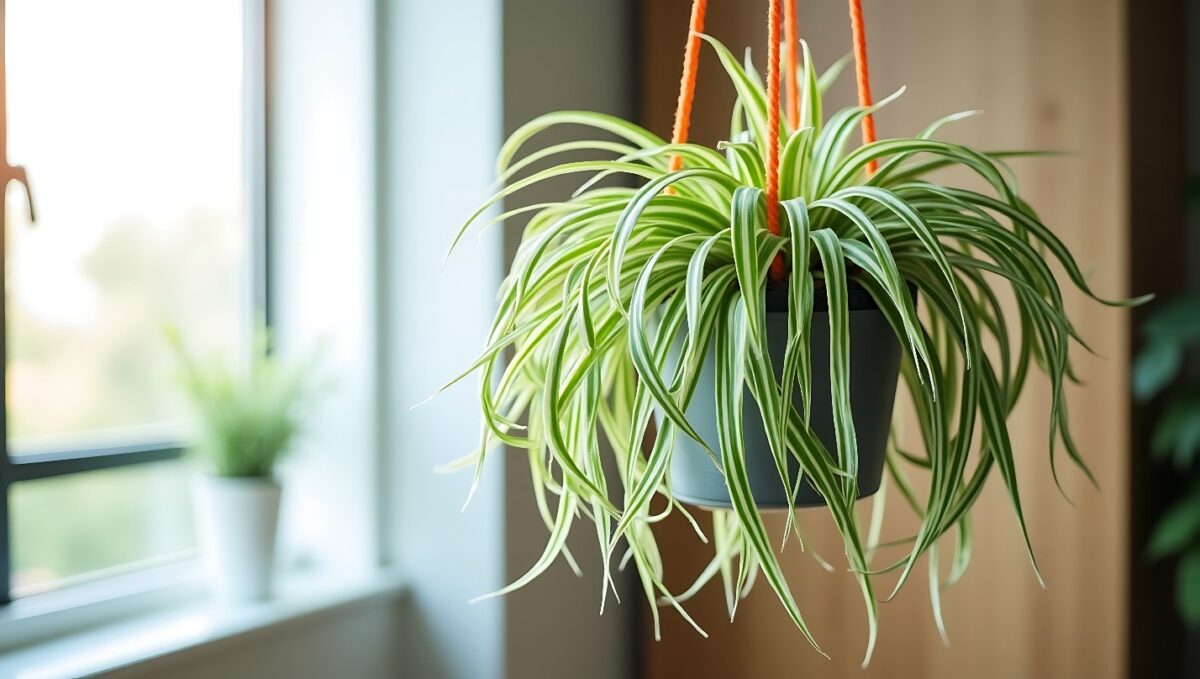
The spider plant is often recommended as one of the easiest and most resilient houseplants for beginners. Its long, arching green leaves and cascading plantlets make it an attractive addition to shelves, hanging baskets, and plant stands. Spider plants thrive in bright, indirect light and tolerate occasional neglect, making them ideal for busy households. They are also recognized by the ASPCA as non-toxic to cats and dogs.[2]

Why Pet Owners Love It

  • Easy to grow
  • Adaptable to various indoor conditions
  • Produces baby plants for propagation
  • Safe around pets

One thing to note is that some cats enjoy batting at the dangling leaves, so placement may still require consideration.

2. Boston Fern (Nephrolepis exaltata)

Boston ferns bring a lush, tropical feel to indoor spaces. Their feathery fronds add texture and softness to any room while helping create a natural, calming environment.

These plants prefer higher humidity and indirect sunlight, making them particularly well suited to bathrooms or kitchens. According to the ASPCA, Boston ferns are non-toxic to both cats and dogs.[3]

Benefits

  • Pet-safe foliage
  • Attractive hanging plant
  • Help to create a tropical aesthetic
  • Suitable for humid indoor spaces

3. Areca Palm (Dypsis lutescens)

The areca palm is a favorite among interior designers because of its elegant appearance and ability to add height and visual interest to a room.

Its arching fronds resemble those of larger tropical palms, making it an excellent choice for homeowners who want a dramatic statement plant. The ASPCA lists areca palms as non-toxic to cats and dogs.[4]

Best Features

  • Tall, graceful growth
  • Tropical appearance
  • Suitable for bright indoor locations
  • Safe for households with pets

4. Calathea

Calatheas are known for their striking leaf patterns and vibrant colors. Many varieties feature dramatic striping, purple undersides, and intricate markings that make them stand out among common houseplants. Calatheas prefer moderate to bright indirect light and benefit from consistent moisture and humidity. The ASPCA recognizes calathea species as non-toxic to pets.[5]

Why They’re Popular

  • Unique decorative foliage
  • Numerous varieties available
  • Safe for cats and dogs
  • Excellent for indoor plant collections

5. Prayer Plant (Maranta leuconeura)

Closely related to calatheas, prayer plants are named for their distinctive leaf movements. Their leaves fold upward at night, resembling hands in prayer. Prayer plants feature colorful foliage with red veins and patterned leaves that provide year-round visual appeal. They are considered non-toxic to cats and dogs by the ASPCA.[6]

Advantages

  • Fascinating daily leaf movement
  • Compact size
  • Colorful foliage
  • Pet-friendly choice

6. Parlor Palm (Chamaedorea elegans)

The parlor palm has been a popular indoor plant since the Victorian era. Its delicate fronds and compact growth habit make it an excellent option for apartments, offices, and smaller rooms. This palm tolerates lower light conditions better than many tropical plants and is listed as non-toxic to cats and dogs.[7]

Why It Works Well Indoors

  • Low maintenance
  • Adaptable to moderate light
  • Elegant appearance
  • Safe around pets

7. African Violet (Saintpaulia)

Not every pet-safe houseplant is grown primarily for its foliage. African violets provide colorful blooms that can brighten indoor spaces throughout much of the year. These compact flowering plants come in shades of purple, pink, white, and blue and perform well on windowsills with bright indirect light. The ASPCA identifies African violets as non-toxic to cats and dogs.[8]

Highlights

  • Frequent flowering
  • Small footprint
  • Variety of flower colors
  • Safe for pet households

8. Peperomia

Peperomia encompasses a large group of attractive houseplants available in many shapes, colors, and textures. Some varieties feature thick succulent-like leaves, while others display rippled or variegated foliage. These adaptable plants thrive in bright, indirect light and generally require minimal maintenance. Peperomia species are considered non-toxic to cats and dogs.[9]

Benefits

  • Wide variety of appearances
  • Easy care requirements
  • Compact growth
  • Pet-safe designation

9. Haworthia

Many succulent enthusiasts assume they must avoid succulents if they own pets, but Haworthia offers a pet-safe alternative. These small succulents feature thick, pointed leaves and often resemble miniature aloe plants. Unlike aloe vera, which can be toxic to pets, Haworthia is generally recognized as non-toxic.[10]

Why It’s a Great Choice

  • Drought tolerant
  • Ideal for sunny windows
  • Compact size
  • Suitable for beginners

10. Orchid (Phalaenopsis Species)

Orchids are often viewed as difficult plants, but many modern Phalaenopsis orchids are surprisingly manageable for indoor gardeners. Their elegant flowers can last for months and come in a wide range of colors and patterns. The ASPCA lists Phalaenopsis orchids as non-toxic to cats and dogs.[11]

Advantages

  • Long-lasting blooms
  • Elegant appearance
  • Suitable for indoor cultivation
  • Pet-safe status

Additional Tips for Pet-Friendly Plant Care

Even when selecting non-toxic plants, responsible plant ownership remains important.

  • Place Plants Strategically

Some pets enjoy digging in soil, chewing leaves, or knocking over pots. Position plants where they are less likely to become playthings.

  • Avoid Chemical Exposure

Fertilizers, pesticides, and leaf shine products may pose risks even when the plant itself is non-toxic. Always follow product instructions carefully and keep chemicals out of reach of pets.

  • Monitor Pet Behavior

Individual pets have unique habits. Some may completely ignore plants, while others may investigate every leaf within reach.

  • Consult a Veterinarian When Necessary

If a pet consumes a large amount of any plant or develops unusual symptoms, contact a veterinarian or the ASPCA Animal Poison Control Center for guidance.

Creating a Safe and Beautiful Indoor Garden

Pet ownership does not mean giving up the benefits of indoor plants. By choosing species recognized as non-toxic to cats and dogs, homeowners can enjoy a greener living space while reducing potential risks to their animals.

Plants such as spider plants, Boston ferns, areca palms, calatheas, prayer plants, parlor palms, African violets, peperomias, Haworthias, and orchids demonstrate that safety and beauty can coexist. These species offer a variety of colors, textures, sizes, and growth habits, allowing pet owners to create attractive indoor gardens that complement their homes and lifestyles.

With thoughtful plant selection and proper care, it is entirely possible to cultivate a thriving indoor oasis that both people and pets can enjoy.

References

  1. ASPCA Animal Poison Control Center. Plant safety information and toxicology resources. https://www.aspca.org/pet-care/animal-poison-control
  2. ASPCA. Spider Plant (Chlorophytum comosum). https://www.aspca.org/pet-care/animal-poison-control/toxic-and-non-toxic-plants/spider-plant
  3. ASPCA. Boston Fern (Nephrolepis exaltata). https://www.aspca.org/pet-care/animal-poison-control/toxic-and-non-toxic-plants/boston-fern
  4. ASPCA. Areca Palm (Dypsis lutescens). https://www.aspca.org/pet-care/animal-poison-control/toxic-and-non-toxic-plants/areca-palm
  5. ASPCA. Calathea. https://www.aspca.org/pet-care/animal-poison-control/toxic-and-non-toxic-plants/calathea
  6. ASPCA. Prayer Plant (Maranta leuconeura). https://www.aspca.org/pet-care/animal-poison-control/toxic-and-non-toxic-plants/prayer-plant
  7. ASPCA. Parlor Palm (Chamaedorea elegans). https://www.aspca.org/pet-care/animal-poison-control/toxic-and-non-toxic-plants/parlor-palm
  8. ASPCA. African Violet (Saintpaulia). https://www.aspca.org/pet-care/animal-poison-control/toxic-and-non-toxic-plants/african-violet
  9. ASPCA. Peperomia. https://www.aspca.org/pet-care/animal-poison-control/toxic-and-non-toxic-plants/peperomia
  10. ASPCA. Haworthia. https://www.aspca.org/pet-care/animal-poison-control/toxic-and-non-toxic-plants/haworthia
  11. ASPCA. Orchid (Phalaenopsis Species). https://www.aspca.org/pet-care/animal-poison-control/toxic-and-non-toxic-plants/orchid

[1] ASPCA Animal Poison Control Center. Plant safety information and toxicology resources. https://www.aspca.org/pet-care/animal-poison-control

[2] ASPCA. Spider Plant (Chlorophytum comosum). https://www.aspca.org/pet-care/animal-poison-control/toxic-and-non-toxic-plants/spider-plant

[3] ASPCA. Boston Fern (Nephrolepis exaltata). https://www.aspca.org/pet-care/animal-poison-control/toxic-and-non-toxic-plants/boston-fern

[4] ASPCA. Areca Palm (Dypsis lutescens). https://www.aspca.org/pet-care/animal-poison-control/toxic-and-non-toxic-plants/areca-palm

[5] ASPCA. Calathea. https://www.aspca.org/pet-care/animal-poison-control/toxic-and-non-toxic-plants/calathea

[6] ASPCA. Prayer Plant (Maranta leuconeura). https://www.aspca.org/pet-care/animal-poison-control/toxic-and-non-toxic-plants/prayer-plant

[7] ASPCA. Parlor Palm (Chamaedorea elegans). https://www.aspca.org/pet-care/animal-poison-control/toxic-and-non-toxic-plants/parlor-palm

[8] ASPCA. African Violet (Saintpaulia). https://www.aspca.org/pet-care/animal-poison-control/toxic-and-non-toxic-plants/african-violet

[9] ASPCA. Peperomia. https://www.aspca.org/pet-care/animal-poison-control/toxic-and-non-toxic-plants/peperomia

[10] ASPCA. Haworthia. https://www.aspca.org/pet-care/animal-poison-control/toxic-and-non-toxic-plants/haworthia

[11] ASPCA. Orchid (Phalaenopsis Species). https://www.aspca.org/pet-care/animal-poison-control/toxic-and-non-toxic-plants/orchid

Categories
Saralyn Wasserman

Native Plants and Their Role in Local Ecosystems

Native plants are increasingly gaining attention among homeowners, landscapers, conservationists, and gardeners . . . and for good reasons. While ornamental plants imported from other regions may offer visual appeal, native species provide a wide range of environmental benefits that extend far beyond aesthetics. These plants have evolved over thousands of years alongside local wildlife, climate conditions, soils, and ecosystems, making them uniquely suited to support ecological health.

As concerns about water conservation, biodiversity loss, and habitat degradation continue to grow, many people are looking for practical ways to make a positive environmental impact. Saralyn Wasserman explores how one of the simplest and most effective actions is incorporating native plants into residential landscapes, community gardens, parks, and restoration projects. Native species help reduce water consumption, support pollinators and wildlife, improve soil health, and contribute to the resilience of local ecosystems.

Understanding the role native plants play in the environment can help homeowners make informed landscaping choices that benefit both their properties and the natural world around them.

What Are Native Plants?

Native plants are species that occur naturally within a specific region and have developed there without human introduction. These plants evolved alongside local insects, birds, mammals, fungi, and microorganisms, creating intricate ecological relationships that have developed over centuries, and even millennia.[1]

Examples of native plants vary by location. In the southeastern United States, species such as purple coneflower, black-eyed Susan, beautyberry, and longleaf pine are considered native. In the western states, native species may include California poppies, sagebrush, and various species of oak.

Because native plants  have adapted to local conditions, they generally require fewer resources and less maintenance than many non-native ornamental species.

Reduced Water Use and Improved Drought Tolerance

One of the most significant environmental benefits of native plants is their ability to thrive with less supplemental watering.

Many traditional man-made landscapes rely heavily on turfgrass and exotic ornamentals that require frequent irrigation to remain healthy. According to the U.S. Environmental Protection Agency (EPA), outdoor water use accounts for nearly 30 percent of household water consumption nationwide, with much of that water devoted to landscape irrigation.[2] In arid regions, outdoor water use can account for an even larger percentage of residential consumption.

Native plants are naturally adapted to local rainfall patterns and climate conditions. Once established, many native species can survive with little or no supplemental irrigation beyond normal precipitation.

Benefits of Reduced Water Use

  • Lower household water consumption
  • Reduced strain on municipal water supplies
  • Lower utility costs
  • Improved drought resilience
  • Reduced energy use associated with water treatment and delivery

By replacing even portions of traditional lawns with native vegetation, homeowners can reduce their landscape’s water demands while maintaining an attractive outdoor space.

Supporting Pollinators and Biodiversity

Biodiversity refers to the variety of living organisms within an ecosystem, including plants, animals, insects, fungi, and microorganisms. Healthy ecosystems depend on biodiversity because species interact with and support one another in countless ways.

Native plants serve as the foundation of these relationships.

Research from the National Wildlife Federation notes that approximately 90 percent of plant-eating insects are specialists, meaning they can only feed on certain native plant species with which they evolved.[3] When native plants disappear from a landscape, many insects lose critical food sources.

This relationship has broader implications because insects form the base of many food webs.

Native Plants Support:

  • Bees
  • Butterflies
  • Moths
  • Beetles
  • Birds
  • Small mammals
  • Amphibians

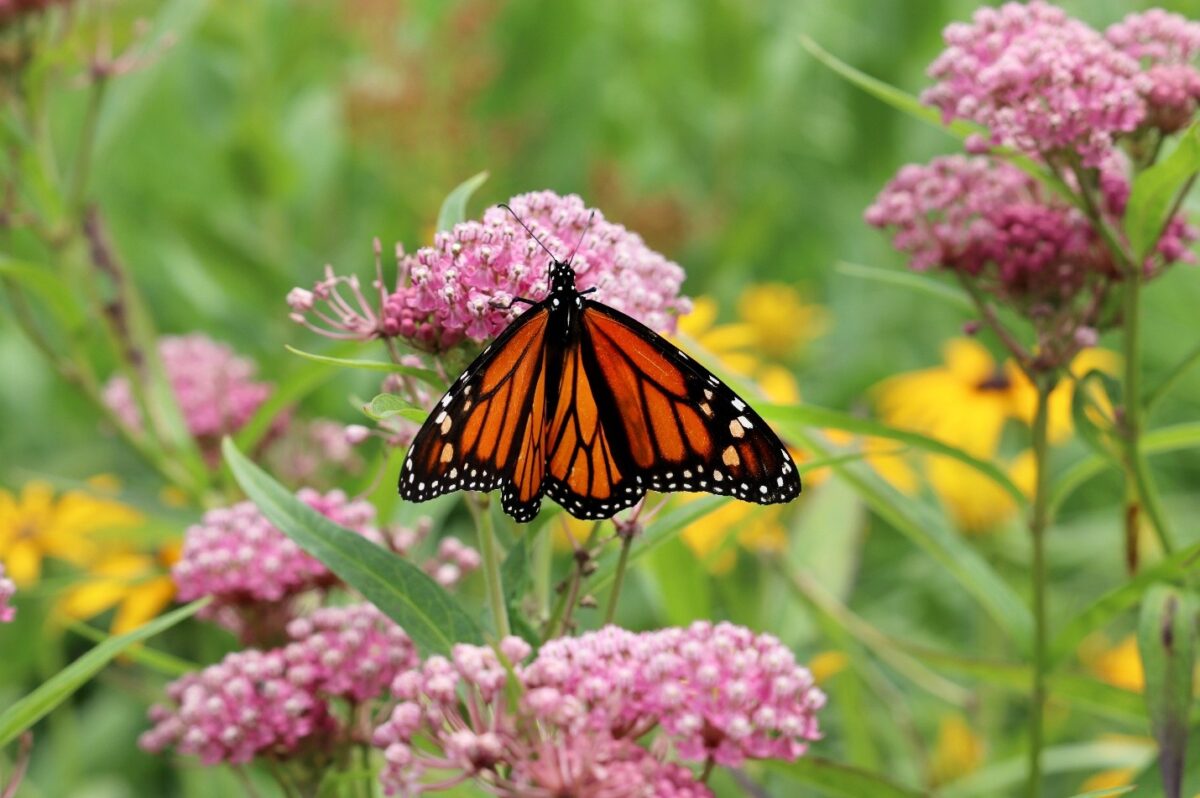
For example, monarch butterflies depend on milkweed species as the sole host plant for their caterpillars. Without milkweed, monarch populations cannot successfully reproduce.[4]

Similarly, many native bee species rely on pollen and nectar from specific native flowers. Introducing a greater diversity of native plants can help sustain pollinator populations that play a crucial role in agriculture and natural ecosystems.

Creating Habitat for Wildlife

Wildlife requires more than food to survive. Animals also need shelter, nesting sites, breeding grounds, and protection from predators. Native plants provide these essential habitat features.

Trees, shrubs, grasses, and wildflowers create layered habitats that support a wide range of species. Native shrubs may provide nesting locations for birds, while native grasses offer cover for small mammals and ground-nesting insects.

The National Audubon Society emphasizes that native plants provide the food resources birds need throughout their life cycles, including seeds, berries, nectar, and insect prey.[5]

Wildlife Benefits of Native Landscapes

  • Increased nesting opportunities
  • Enhanced food availability
  • Improved migration support
  • Better shelter from weather and predators
  • Greater ecosystem stability

Even relatively small residential landscapes can become valuable wildlife refuges when planted with native species.

Improving Soil Health

Healthy soils are critical for ecosystem function. Native plants contribute to soil health through their root systems, organic matter production, and interactions with soil microorganisms.

Many native species develop deep root systems that help stabilize soil and improve its structure. These roots allow water to infiltrate more effectively, reducing runoff and erosion.

As leaves, stems, and roots decompose, they contribute organic matter that enriches the soil and supports beneficial microorganisms.

Soil Benefits Include:

  • Reduced erosion
  • Increased organic matter
  • Improved nutrient cycling
  • Better water infiltration
  • Enhanced microbial activity

Deep-rooted native prairie plants, for example, can extend several feet below the soil surface, helping maintain soil structure and resilience during drought conditions.[6]

Reducing the Need for Fertilizers and Chemicals

Because native plants are adapted to local environments, they often require fewer chemical inputs than non-native ornamental species.

Traditional man-made landscapes may rely heavily on fertilizers, pesticides, and herbicides to maintain plant health and appearance. These products can contribute to environmental problems when they enter waterways through stormwater runoff.  Also, excess nutrients, particularly nitrogen and phosphorus, can lead to harmful algal blooms and degraded water quality.[7]

Native plants generally require:

  • Less fertilizer
  • Fewer pesticides
  • Reduced herbicide applications
  • Lower overall maintenance

This reduction in chemical use benefits not only the environment but also homeowners seeking more sustainable landscaping solutions.

Enhancing Climate Resilience

Climate change is creating new challenges for ecosystems worldwide, including increased temperatures, shifting precipitation patterns, and more frequent extreme weather events. Native plants can help communities adapt to these changes. 

Because native species evolved under local environmental conditions, many possess traits that improve resilience against regional climate stresses. Deep root systems, drought tolerance, flood resistance, and temperature adaptability often allow native plants to withstand environmental fluctuations better than many introduced (non-native) species.

In urban environments, native trees and vegetation can also help reduce the heat island effect by providing shade and cooling through evapo-transpiration.[8]

As communities seek ways to improve environmental sustainability, native landscaping is increasingly viewed as an important climate adaptation strategy.

Combating Habitat Loss

Habitat loss is considered one of the leading threats to biodiversity worldwide.

Urban development, agriculture, road construction, and land conversion have fragmented natural ecosystems, reducing available habitat for countless species. According to the International Union for Conservation of Nature (IUCN), habitat loss remains a primary driver of species decline globally.[9]

Native plant landscaping helps restore some of the ecological functions lost through development. While a single yard may seem insignificant, collectively, residential landscapes cover millions of acres across the United States. When homeowners choose native species, these spaces can function as ecological corridors that connect fragmented habitats and support wildlife movement.

Making the Transition to Native Plants

Transitioning to native landscaping does not require replacing an entire yard overnight.

Homeowners can begin by:

  • Adding native flowering plants to garden beds
  • Replacing portions of turfgrass with native groundcovers
  • Planting native trees and shrubs
  • Incorporating pollinator gardens
  • Selecting native species suited to local growing conditions

Local extension offices, native plant societies, botanical gardens, and conservation organizations can provide guidance on species that perform well in specific regions.

Starting small allows gardeners to gain experience while gradually creating a more environmentally beneficial landscape.

Native plants play a vital role in supporting healthy ecosystems. By choosing species that evolved in a particular region, homeowners and communities can reduce water use, increase biodiversity, improve wildlife habitat, strengthen soil health, reduce chemical inputs, and enhance resilience to environmental change.

As habitat loss and ecological challenges continue to affect natural systems, native landscaping offers a practical and accessible way for individuals to contribute to conservation efforts. Every native flower planted, every native shrub established, and every lawn converted to native vegetation helps rebuild ecological connections that support both wildlife and human communities.

Far more than a landscaping trend, native plants represent an investment in the long-term health and sustainability of local ecosystems.

References

  1. U.S. Forest Service. “Why Native Plants Matter.” https://www.fs.usda.gov/wildflowers/Native_Plant_Materials/why_native.shtml
  2. U.S. Environmental Protection Agency (EPA). “Outdoor Water Use in the United States.” https://www.epa.gov/watersense/statistics-and-facts
  3. National Wildlife Federation. “Native Plants and Pollinators.” https://www.nwf.org/Garden-for-Wildlife/About/Native-Plants
  4. U.S. Fish & Wildlife Service. “Monarch Butterfly and Milkweed.” https://www.fws.gov/story/spreading-milkweed-not-monarch-myths
  5. National Audubon Society. “Why Native Plants Matter for Birds.” https://www.audubon.org/content/why-native-plants-matter
  6. USDA Natural Resources Conservation Service. Information on native prairie plant root systems and soil health. https://www.nrcs.usda.gov
  7. U.S. Environmental Protection Agency (EPA). “Nutrient Pollution.” https://www.epa.gov/nutrientpollution
  8. U.S. Environmental Protection Agency (EPA). “Using Trees and Vegetation to Reduce Heat Islands.” https://www.epa.gov/heatislands/using-trees-and-vegetation-reduce-heat-islands
  9. International Union for Conservation of Nature (IUCN). “Habitat Loss.” https://www.iucn.org/resources/issues-brief/habitat-loss-and-degradation-and-invasive-alien-species

[1] U.S. Forest Service. “Why Native Plants Matter.” https://www.fs.usda.gov/wildflowers/Native_Plant_Materials/why_native.shtml

[2] U.S. Environmental Protection Agency (EPA). “Outdoor Water Use in the United States.” https://www.epa.gov/watersense/statistics-and-facts

[3] National Wildlife Federation. “Native Plants and Pollinators.” https://www.nwf.org/Garden-for-Wildlife/About/Native-Plants

[4] U.S. Fish & Wildlife Service. “Monarch Butterfly and Milkweed.” https://www.fws.gov/story/spreading-milkweed-not-monarch-myths

[5] National Audubon Society. “Why Native Plants Matter for Birds.” https://www.audubon.org/content/why-native-plants-matter

[6] USDA Natural Resources Conservation Service. Information on native prairie plant root systems and soil health. https://www.nrcs.usda.gov

[7] U.S. Environmental Protection Agency (EPA). “Nutrient Pollution.” https://www.epa.gov/nutrientpollution

[8] U.S. Environmental Protection Agency (EPA). “Using Trees and Vegetation to Reduce Heat Islands.” https://www.epa.gov/heatislands/using-trees-and-vegetation-reduce-heat-islands

[9] International Union for Conservation of Nature (IUCN). “Habitat Loss.” https://www.iucn.org/resources/issues-brief/habitat-loss-and-degradation-and-invasive-alien-species